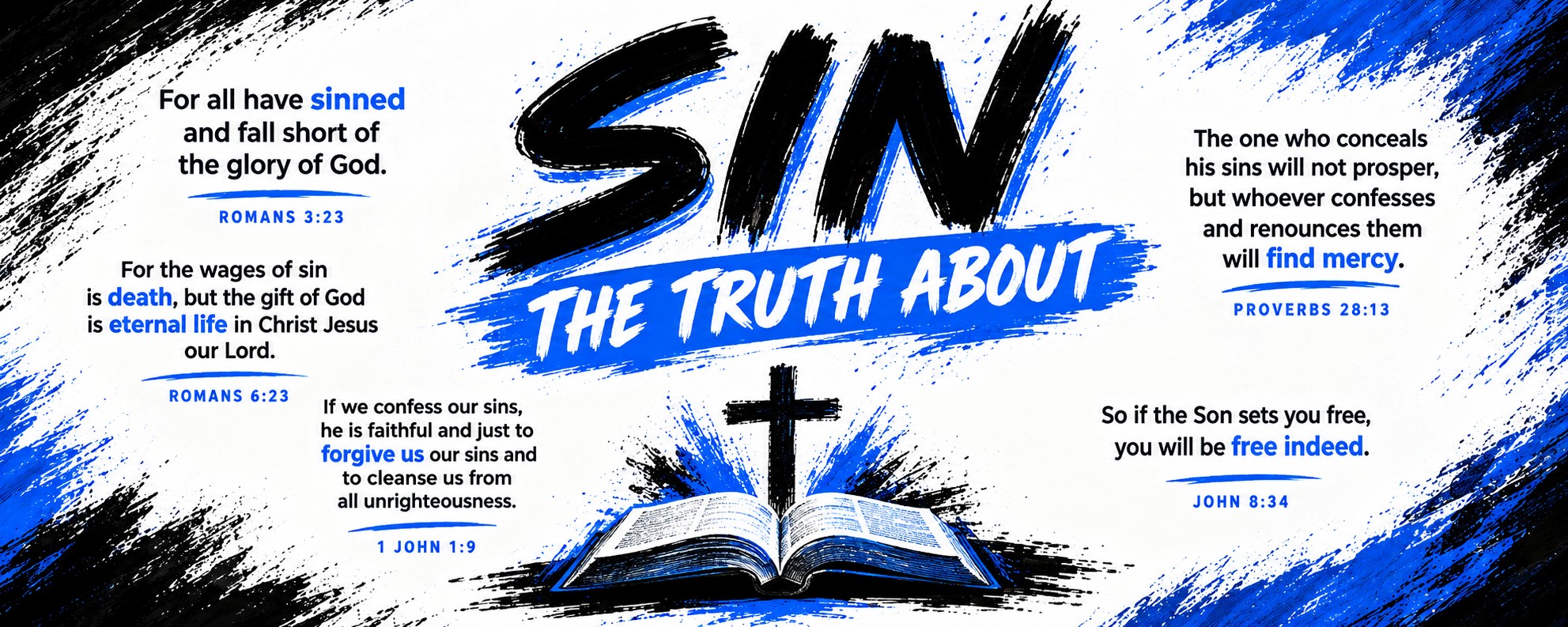
Sins
We are sinners by Adam and Eve's actions of disobeying God's Word and direction. Thus, we are by birth sinful. We are separated eternally from God. Jesus understood we are all capable of sin, and we should not judge others for it.
1. Introduction to Sin
Sin is anything we think, say, or do against God's will, character, and commandments. Sin includes our thoughts, words, actions, attitudes, and/or failing to do what is right. The Bible teaches sin separates us all from God, affects our relationship with Him, and causes our spiritual death. Sin entered humanity through Adam and Eve's disobedience to God in the Garden of Eden (Genesis 3 NASB1995). Since then, sin has affected all humanity. The Old and New Testaments teach God provides a way for our sin to be forgiven through Jesus Christ.
2. Adam and Eve's Sin Was Disobeying God's Command
We are sinners by Adam and Eve's actions of disobeying God's Word and direction. Thus, we are by birth sinful. We are separated eternally from God. Jesus understood we are all capable of sin, and we should not judge others for it. Because of this, we must understand our journeys toward salvation require more than prayer alone.
In short: God commanded ➡ They disobeyed ➡ Sin entered ➡ They became separated from God.
According to Genesis 2–3 NASB1995, God gave Adam a command: Adam could eat from every tree in the Garden of Eden except the tree of the knowledge, of good and evil (Genesis 2:16–17 NASB1995).
Important: The Bible does not actually say the fruit was an apple. It simply calls it the fruit of the tree of knowledge of good and evil.
3. The Devil's Main Tactics
4. What Sin Is
Sin - wrongdoings against God (by rebellion and lawlessness through unrighteous living).
Sins - individual acts or specific wrongdoings.
5. Wrongdoing
6. Sin Is Generally Dealt With As Follows
If we confess our sins, He is faithful and righteous to forgive us our sins and to cleanse us from all unrighteousness. - 1 John 1:9 NASB1995
Therefore repent and return, so that your sins may be wiped away, in order that times of refreshing may come from the presence of the Lord; - Acts 3:19 NASB1995
7. Are All Sins Equal?
In short, the biblical answer is no.
Many people are not quite sure how to answer this question. For example, people hear unbiblical sayings like, "sin is sin.", "sin is not a question if I am saved.", "I'm saved. I can do whatever I want.", "I treat people good.", and "I do good things." There are many different thoughts like these, but they come from an unbiblical, worldly view.
Point 1. The question is not comparing sins, rather, understanding guilt by all sins.
8. How Sins Are Equal
Point 1. Sin is our spiritual death.
Point 2. Sin (any) is enough to make us guilty before God.
Point 3. Sin separates us from God for our spiritual eternity.
Point 4. Sin shows our own choice to be rebellious and lawless towards God and His Holy Word.
Point 5. We alone cannot atone for our sins.
Point 6. For our eternal spirit, we each need God's grace and mercy.
Point 7. We have sin forgiveness through Jesus Christ’s shed blood on the cross to bridge the divide we create(d) between ourselves and God.
Point 8. Without acceptance of Jesus Christ and what He has done for each of us on the cross, we will go to Hell and eventually to the Lake of Fire for eternity as the book of Revelation teaches.
Point 9. We can be free and born again by faith and acceptance of His spirit, and His shed blood on the cross, and walking thereafter in His righteousness.
9. How Sins Are Different (greater or worse)
10. The Unforgivable Sin (blasphemy against the Holy Spirit)
In Matthew 12:31–32 NASB1995, Jesus speaks of a sin standing completely apart from all others: blasphemy against the Holy Spirit, which He states will not be forgiven in this age or the age to come.
11. Atonement
The reconciliation with God by the removal/covering of sin through Jesus Christ.
12. Catholic vs. Protestant Views on Sin
Different Christian traditions categorize the severity of sin in distinct ways based on their theological frameworks.
| Feature | Catholic View | Protestant View |
| Primary Categories | Mortal and Venial sins. | All sins share the same core status of spiritual death. |
| Mortal Sins | Severe offenses (e.g., murder, adultery) that destroy the relationship with God and cause spiritual death. If unconfessed, they lead to eternal separation from God. Requires grave matter, full knowledge, and deliberate consent. | Do not recognize a category of sin that completely severs an authentic believer's salvation, believing justification is secure in Christ. |
| Venial Sins | Lesser offenses that damage but do not destroy the soul's relationship with God. They can be forgiven through prayer, acts of charity, and the Eucharist. | View all sins as damaging to one's relationship and fellowship with God, though differing in earthly severity. |
| The Way to Forgiveness | Ordinarily requires the Sacrament of Reconciliation (Confession) to a priest for mortal sins. |
Involves direct confession to God through prayer, trusting in Christ's once-for-all sacrifice. |
13. Sin from an Earthly Perspective
Point 1. Sins vary in severities.
Point 2. Sins vary in social and personal impacts.
Point 3. Sins vary in punishments.
Point 4. Sins vary in emotional response.
Point 5. Sins require responsibility.
Point 6. Sins have victims.
Point 7. Sins cause divide.
Point 8. Sins require some kind of restitution.
Point 9. Sins require forgiveness.
Point 10. Sins require Jesus’s and victim grace, mercy and sinner forgiveness.
Point 11. Sins require Jesus’s she blood on the cross to atone for them.
Point 12. All sins are different on a case-by-case basis.
14. The Seven Deadly Sins
The Seven Deadly Sins are not actually a specific list found in a single Bible verse. Instead, they were compiled by early Christian theologians as a categorization of human vices to help people understand how one bad habit can lead to a domino effect of other sins.
The list we know today was formalized by Pope Gregory I in the late 6th century and later popularized in literature like Dante Alighieri’s Divine Comedy.
The Seven Deadly Sins and Their Meanings
15. The Biblical Connection
While the specific phrase "Seven Deadly Sins" is not in biblical scripture, the concepts are heavily condemned throughout the Bible. A highly similar, actual biblical list can be found in Proverbs 6:16-19 NASB1995, which outlines seven things God explicitly hates:
There are six things which the Lord hates,
Yes, seven which are an abomination to Him:
Haughty eyes, a lying tongue,
And hands that shed innocent blood,
A heart that devises wicked plans,
Feet that run rapidly to evil,
A false witness who utters lies,
And one who spreads strife among brothers. - Proverbs 6:16-19 NASB1995
16. Seven Heavenly Virtues
The Seven Heavenly Virtues were identified by early Christian theologians to serve as direct spiritual antidotes to the Seven Deadly Sins. They were heavily influenced by the 4th-century Christian poet Prudentius in his book Psychomachia ("Battle of the Soul"), which poetically described a war between human virtues and vices. The virtues are divided into two categories: Four Cardinal Virtues (derived from classical Greek philosophy) and Three Theological Virtues (1 Corinthians 13).
17. The Antidote Table
| The Seven Deadly Sins | The Heavenly Virtue | What It Means |
| Pride | Humility | Freedom from arrogance. Understanding your true worth under God, which allows you to selflessly serve others. |
| Greed | Charity (Generosity) | The willingness to give of your time, resources, and love to others without expecting anything in return. |
| Wrath | Patience (Forbearance) | Resolving conflict peacefully, enduring difficult circumstances with composure, and choosing forgiveness over revenge. |
| Envy | Kindness | Genuine happiness for the success of others, paired with compassion, charity, and a gentle spirit. |
| Lust | Chastity (Purity) | Honoring the sanctity of relationships and treating others with respect rather than viewing them as objects. |
| Gluttony | Temperance (Moderation) | Practicing self-control, restraint, and mindfulness over physical desires, ensuring you consume only what is healthy. |
| Sloth | Diligence | Commitment, hard work, and persistence in your spiritual life, daily duties, and care for others. |
18. The Two Foundations of the Virtues
19. Why Are They Called "Theological" Virtues?
Unlike the Cardinal Virtues (like justice or moderation), which anyone can practice through habit and willpower, the Theological Virtues are distinct because they flow directly from God into the human heart.
20. An Example of "Theological" Virtue
While "fairness" is traditionally categorized under the Cardinal Virtue of Justice, it is supercharged and transformed when combined with the Theological Virtues—especially Love.
In 1 Corinthians 13:4-6 NASB1995, Paul describes how Love treats other people, highlighting concepts of ultimate fairness, equity, and selflessness:
In short, human fairness says, "I will give you exactly what you deserve." Biblical love goes a step further, saying, "I will treat you with dignity, respect, and grace. Regardless of what you deserve, I will show mercy and restraint."
With Understanding
God created each of us with a unique purpose, for a specific time, and according to His perfect plan. We can be thankful and grateful for who He made us to be, knowing our lives have meaning and value. Above all, we can rest in the truth God loves each of us deeply and unconditionally, and His desire is for us to walk in His will every day.
No matter where you have been or what your story looks like, there is always hope and the opportunity for a fresh start. We invite you to take your next step, grow in faith, and experience all God has in store for you.
 Forgiveness